
I’m sure everyone knows this by now – we like to eat. So we obviously signed up for a food tour of Ponta Delgada, with a company called Hungry Whales. We went this morning and not only got to taste a whole bunch of yummy things, we learned a lot about what we were eating, and the island!
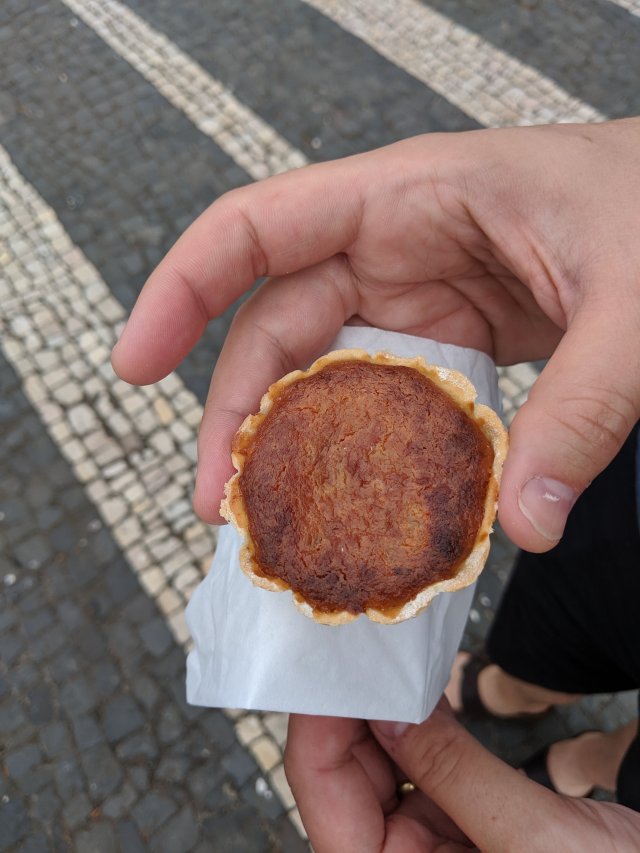
First, we had a queijada with orange, pineapple, and cinnamon. We learned that queijadas are named that because they have the consistency of cheese (queija).
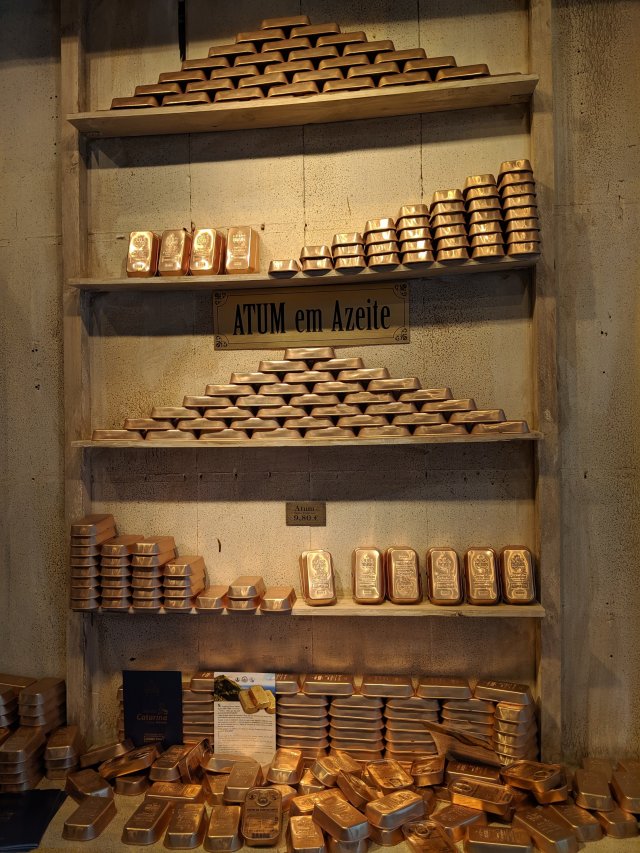
Then we walked around the town and learned about where the white stones in the street came from (limestone ballast from ships). Then we stopped at a canned fish store that exists in mainland Portugal, called Comur, but they sell special Azores fish in tins that look like gold bars. Very pretty store.

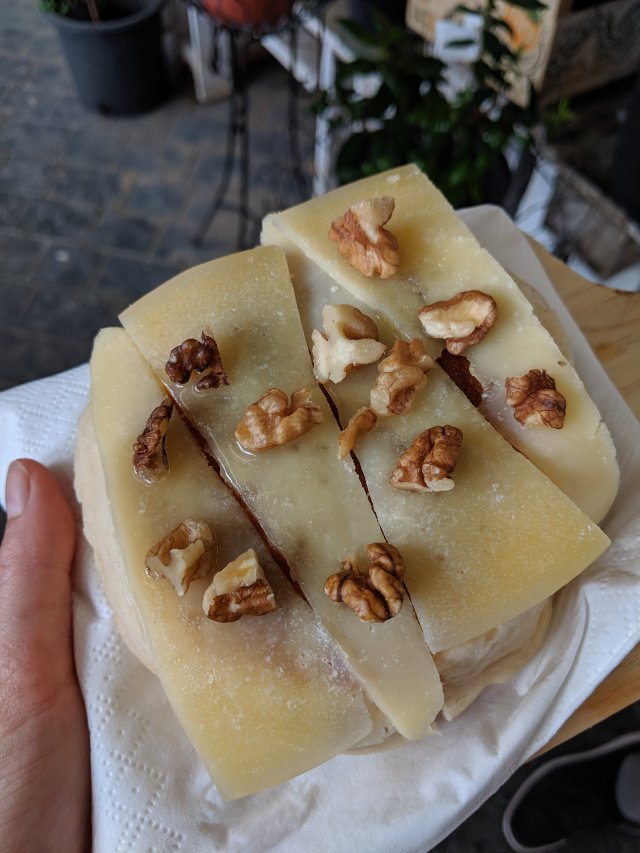
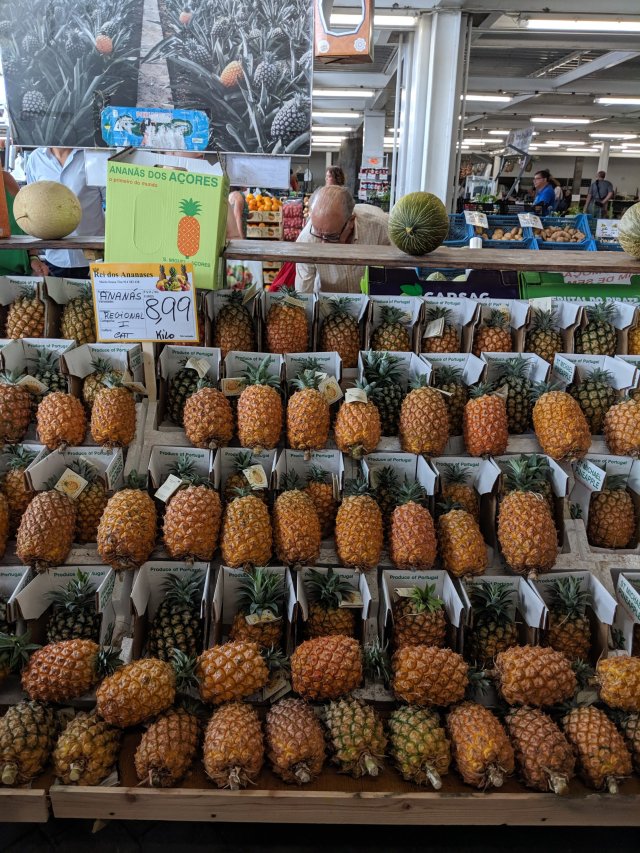
We stopped at the main market in the city, where they had local produce, fish, spices, honey, etc. We tried bolo levedo (English muffin but slightly sweet and very soft) with Sao Jorge cheese, honey, and walnuts. Apparently bolo levedo was developed because the working class were not allowed to own ovens. So they made these breads on a pan! Sooooo delicious, I want to eat this every day.
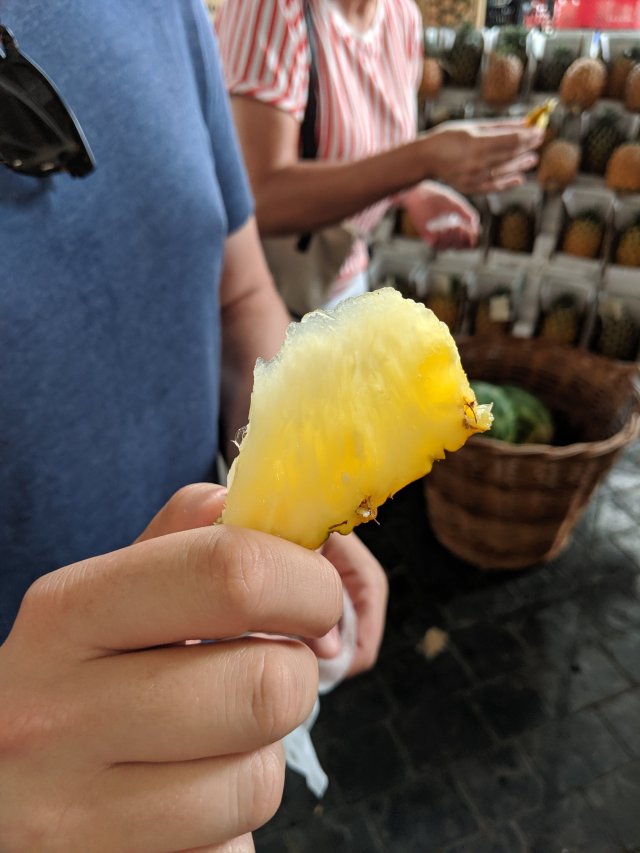
We had some more Azores pineapple, which we learned is identifiable by its smaller crown of leaves and it’s lack of a hard core. It’s also slightly orange in colour.
We also learned that there are two types of honey here – winter and summer. The winter honey is made from an invasive plant that smells really nice and has a sugary goop. On Pico, this honey won an award for best honey in the world! It also has 30% more sugar content and has an amazing depth of flavour. The summer honey is made from different flowers around the island, and is much darker in colour.
Our first stop for a hot food item was a snack bar where we had a fried squid ink patty with tuna inside, and a fried sausage thing. The photo isn’t good, just take my word for it that it was delicious!
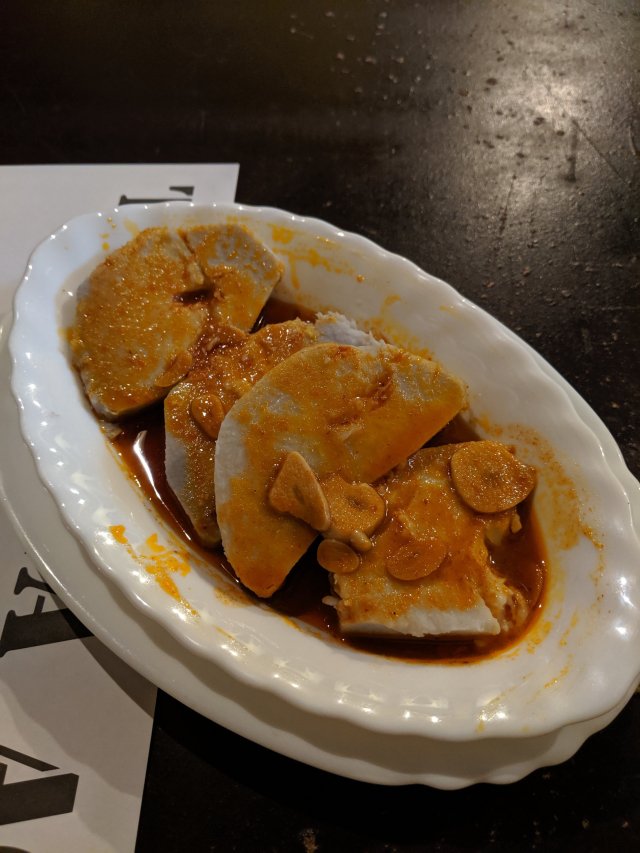
Then, funny enough, we went to the restaurant we ate at last night, and luckily had different dishes. We had taro (which our guide didn’t even like but said we should try) – the farmers on the island used to have to grow a certain percentage of taro as their crops just in case there was an issue with their other crops, as it is so easy to grow.
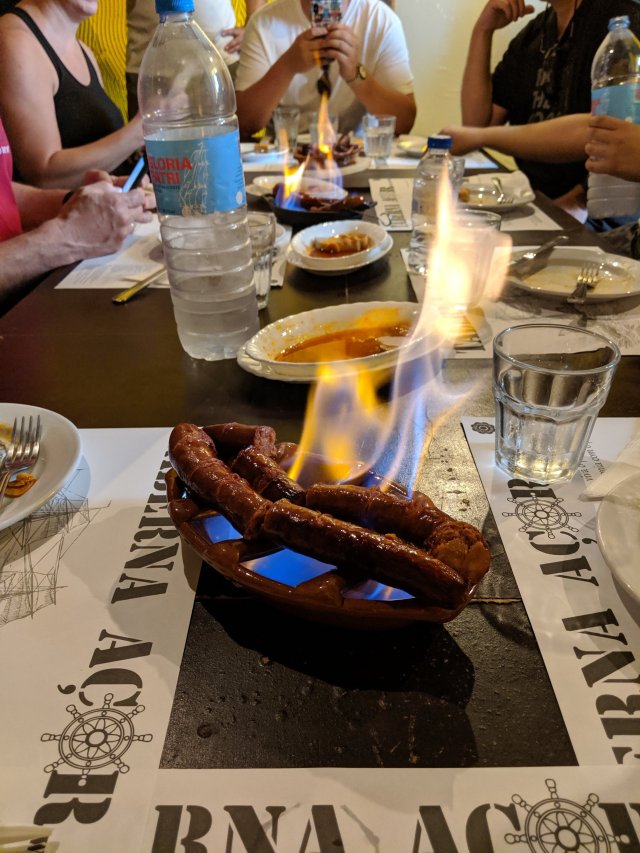
Then we had flaming sausages! This is a traditional thing to do for special occasions.
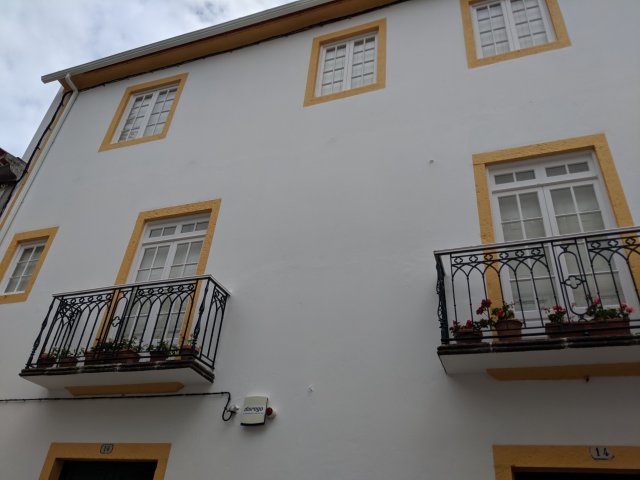
The next stop was to the outside of a synagogue. We learned that there were 2 migrations of Jews to the Azores – one during the Inquisition (they were given the option to move here as long as they were baptised Catholic) and one in the 1800s. At one point, there were 5 synagogues on Sao Miguel. The food here and a lot of the traditions around food were influenced by these Jewish families. The synagogue isn’t used anymore, but it’s now a museum.
Also, because the synagogue was Sephardic, the windows are not aligned. It’s some spiritual/Kabbalah thing apparently?
We visited our guide’s old high school, which was very cool because it used to be part of an orange plantation. Part of the reason why the Azores has pineapples is because there was an orange disease in the 1800s, and they needed a new crop to replace them. But before that, oranges were the hot commodity here.
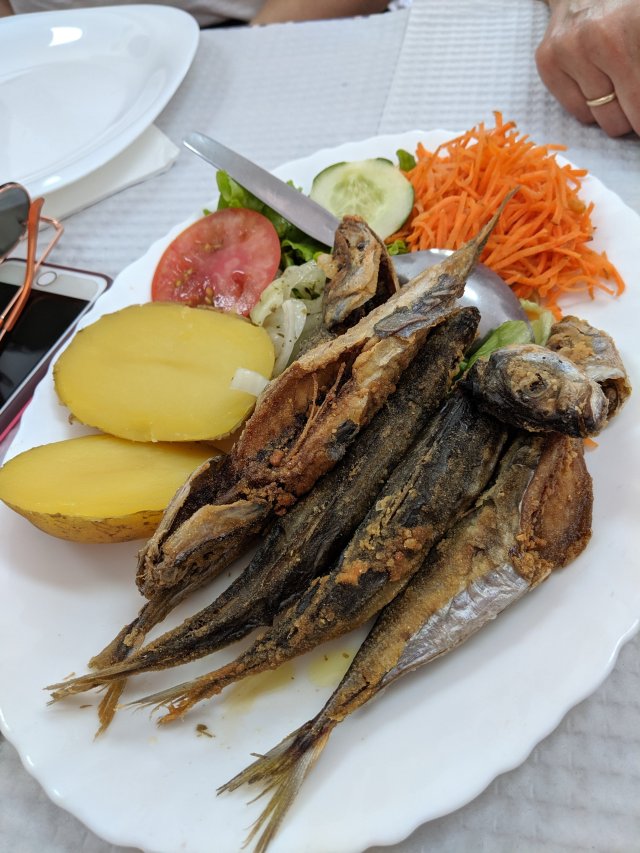
Next, we had fried mackerel, which you’re supposed to eat with your fingers. You can eat the skin because there are no scales. Delicious and crispy!
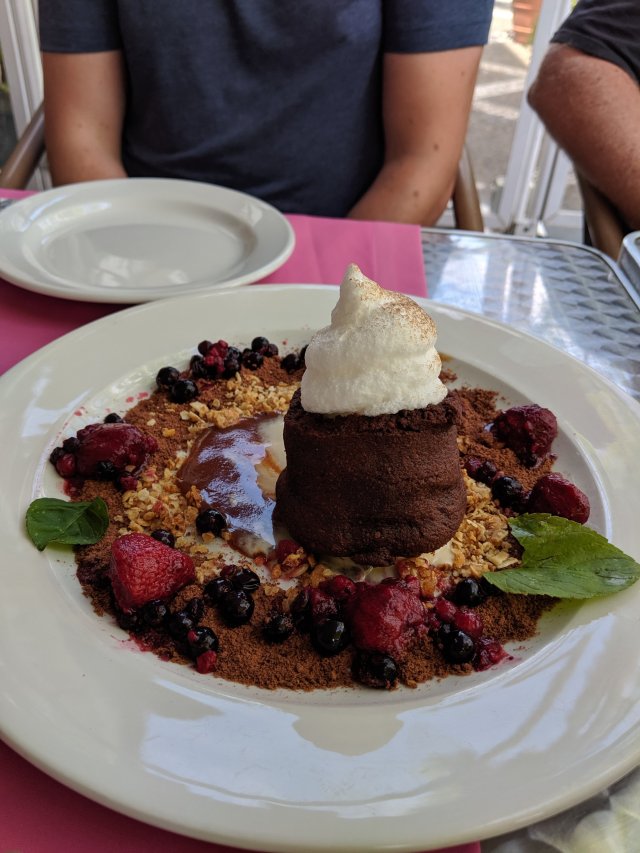
Finally, we had dessert, which was a cookie/cake thing with ice cream and fruit and meringue, in the shape of a volcano. We were stuffed by the end!
Totally worth doing the tour. Our guide, Rafael, was fantastic, and we learned so much!
 I Came, Azores, I Conquered